How did Bastille pick their band name?
14 July 2023, 15:00



Find out the meaning of and history behind Dan Smith and co's name.
Bastille are a British band who formed in 2010, starting out as a solo project by lead vocalist Dan Smith.
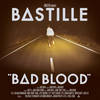
Later expanding to include keyboardist Kyle Simmons, bassist and guitarist Will Farquarson and drummer Chris Wood, the four-piece has gone on to release four albums: 2013's Bad Blood, 2016's Wild World, Doom Days in June 2019 and Give Me The Future in February 2022.
Over 10 years since they formed and the band are still going strong, but do you know the meaning behind their band name? Find out here...

Bastille - Distorted Light Beam (Official Video)
What are Bastille named after?
Bastille are named after the Storming of the Bastille in Paris, France, on 14 July 1789, an event which saw the medieval fortress, armoury and political prison invaded.
Despite the Bastille only containing seven inmates at the time, its fall was considered a flashpoint of the French revolution because it represented the royal authority in Paris.

To mark the historical event Bastille Day is celebrated every year in France on 14 July, usually with an enormous firework display centred around the Eiffel Tower, the Iena bridge and the Trocadero gardens.

But what does the French Revolution have to do with a London-formed four-piece?
Quite simply, 14 July also happens to be the birthday of frontman Dan Smith, who is partial to a historical and literary reference or two.
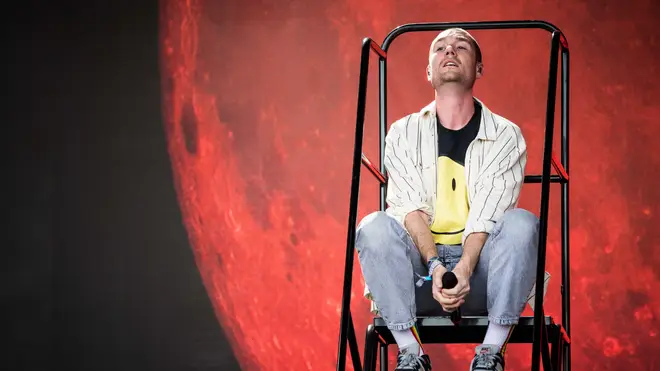
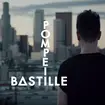
Dan Smith also recently explained the meaning behind Bastille's Pompeii single, which is named after the historical event.
Watch our video to find out more:

Bastille on the meaning of Pompeii
Speaking to Radio X, he said: "I was reading a book that had some picture of the people who got caught up in the volcanic eruption.
"And it's just such a kind of dark powerful image, and it got me thinking about how boring it must have been emotionally after the event. To be sort of stuck in that same position for hundreds and hundreds of years.
"So, the song is sort of an imaginary conversation between these two people who are stuck next to each other in their sort of tragic death pose".
He added, jokingly: "Which you know... is just your kind of average pop song topic!"